
“Music as Political Resistance and Social Responsibility in Tanzania”
In Tanzania, music has never been just entertainment. It’s been a battlefield for
decolonization, a tool for state control, and now, a space where young artists negotiate their
responsibility to society under increasing political pressure.
Pre-Colonial Foundations: Ngoma as Social Infrastructure
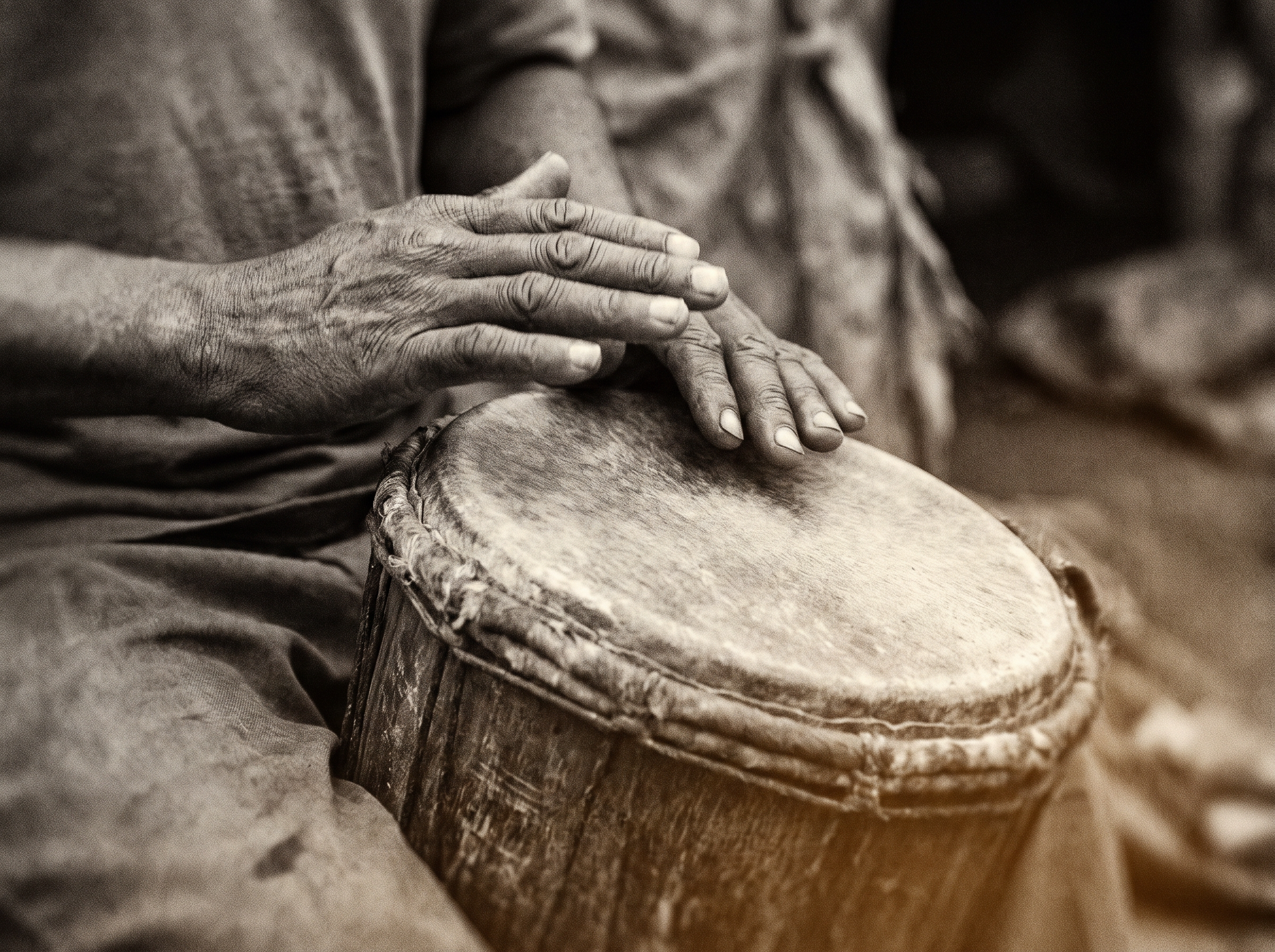
Before the British arrived, Tanzania’s sonic landscape was governed by ngoma a complex system
that Europeans dismissed as mere “drum and dance.” In reality, ngoma was our constitution,
classroom, and crisis center rolled into one. Every ethnic community had its ngoma traditions,
serving distinct functions:
- Educational transmission: Through intergenerational songs, youth learned
history, morality, and survival skills - Conflict resolution: Elders used ceremonial ngoma to mediate disputes and
restore community harmony - Healing and spiritual protection: Ngoma rituals connected the living with
ancestors, treating illness as social disconnection - Governance: Chiefs communicated decisions and mobilized labor through
specific rhythmic patterns understood across villages
This was music as collective responsibility. No single “artist” existed
everyone participated, and the “voice” belonged to the community. The British would target this
precisely because ngoma was the operating system of autonomous African societies they sought to
dismantle.
Colonial Suppression: The Criminalization of Sound
British colonial rule (1919-1961) waged war on ngoma through multiple mechanisms.
Missionaries denounced it as “unchristian” and “satanic,” while colonial administrators passed
ordinances requiring permits for any drum gathering, effectively criminalizing spontaneous
community assembly . This wasn’t cultural ignorance it was strategic. They understood that ngoma
gatherings could facilitate anti-colonial organizing.
Our ancestors’ response was brilliant: They created Mganda ngoma hybrid
performances that adopted British military uniforms, marching band instruments, and colonial
administrative structures while preserving core Tanzanian rhythmic patterns and social functions
. This was decolonization through adaptation, not rejection. They gave the colonizers what they
demanded superficially while safeguarding what mattered: community cohesion and coded
communication.
Simultaneously, the colonial economy created dansi (dance bands) Krio brass bands from Sierra
Leone, Congolese rumba, and coastal taarab that offered urban escapism but remained politically
safe. The British encouraged these as “civilized” alternatives to ngoma, introducing the
dangerous idea that some music was “progressive” while other forms were “primitive.”
Ujamaa and the State Capture of Music (1961-1985)
When Nyerere launched Ujamaa (African Socialism), he inherited the colonial logic of musical
control but inverted its purpose. The 1967 Arusha Declaration explicitly weaponized culture for
nation-building, creating a Ministry of National Culture that privileged ngoma as “authentic
pre-colonial culture” while marginalizing dansi and taarab as “foreign corruption” . The colonial
dichotomy remained only the labels changed.
The state built a vertical control structure :
- Radio Tanzania Dar es Salaam became the sole broadcaster, with
state-appointed producers deciding what could air - The 1984 establishment of Baraza la Sanaa la Taifa (BASATA) gave the state
legal authority to license, censor, and discipline all artists - Government-owned bands like NUTA Jazz Band, DDC Mlimani Park Orchestra, Juwata Jazz, and
Vijana Jazz operated as civil service units, with musicians receiving government salaries and
pensions
The Sponsorship System’s Double Bind
Musicians became state employees. DDC Mlimani Park Orchestra, owned by the Dar es Salaam
Development Corporation, remained state property until 2009, 25 years after Nyerere left office
. This created a generation of artists who internalized that responsibility meant serving state
ideology. Critique became career suicide.
But subversion emerged from within. By the 1980s, commercial troupes like Tanzania One
Theater (TOT) and Muungano Cultural Troupe competed with state ensembles by addressing sexuality,
urban poverty, and corruption directly challenging Nyerere’s puritanical vision . They used the
state’s own performance infrastructure to undermine its message, proving that control never
equals hegemony.
Crisis and Rebirth: Structural Adjustment’s Sonic Revolution
The 1985 collapse of Ujamaa under IMF Structural Adjustment Programs created a vacuum. State
salaries disappeared, Radio Tanzania’s monopoly crumbled, and American hip-hop cassettes flooded
Dar es Salaam’s streets. Youth who had grown up in Ujamaa’s ideological straitjacket now found a
new language for their disillusionment.
Bongo Flava was born not as imitation but as critique. The name itself “Flava
from Bongo” (“Bongo” meaning “brain,” slang for Dar es Salaam’s survivalist street smarts)
asserted a specifically Tanzanian identity within a global form .
The First Wave of Political Bongo Flava (1990s-2000s)
Professor Jay (Machozi, Jasho na Damu, 2001) transformed Swahili rap with
“Ndio Mzee” (“Yes, Sir?”), a track using deceptively polite address to question presidential
power line-by-line: “Yes sir, when you promised employment, was that for your children only?”
.
Example: Professor Jay – Ndio Mzee (Audio)
Wagosi wa Kaya (Ukweli Mtupu, 2002) recorded “Tanga Kunani” in their native
Kisambaa accent not just linguistic pride, but a decolonial act asserting that all Tanzanian
languages, not just Swahili, could bear political weight. The song exposed how coastal cities
monopolized development while inland regions like Tanga remained in colonial-era poverty .
Example: Wagosi wa Kaya – Tanga Kunani (Audio)
These artists practiced what Brad Garton calls “practicing what you preach” . Professor Jay
later became an MP, but his lyrics remained sharper than his legislative impact a reminder that
institutional politics often domesticates artistic truth-telling.
The New War on Music: Magufuli’s Tanzania (2015-Present)
If Ujamaa tried to co-opt music, the Magufuli regime (2015-2021) declared war on it. BASATA,
once a patronage system, became a weapon of censorship. The 2016 Media Services Act criminalized
“content that ridicules the government” . But the real violence happened off the books.
The Price of Exposing “Government Evils”
Roma Mkatoliki: After releasing songs exposing mineral theft and police
killings, Roma was abducted in March 2017 by unknown assailants in a white Land Cruiser. He was
tortured, beaten, and interrogated about his lyrics before being dumped in a remote area. He
later fled to asylum in the United States.
- Track that triggered abduction: Roma – Kikosi Kipya (Audio)
- Post-abduction interview: Roma Mkatoliki Speaks on Abduction (Video)
Nay wa Mitego: Arrested multiple times, most notably in 2017 for “Wapo” (Are
They There?), a track asking if “there’s still room for criticism in this era.” The chorus
“Wapo, wapo, wapo” was a masterful use of ambiguity .
- Banned song: Nay wa Mitego – Wapo (Lyrics Video)
- Recent political track: Nay wa Mitego – Amkeni (Audio)
Balozi Dola: Forced into exile after “Mnyenyekevu” (“The Groveler”)
satirized the ruling party’s sycophancy. He now performs from undisclosed locations via
YouTube .
- Exile track: Balozi Dola – Mnyenyekadzi (Lyrics)
Sugu (Joseph Mbilinyi): As both Bongo Flava pioneer and opposition MP, he
survived an assassination attempt in 2018. BASATA had already banned several of his songs .
The Mechanisms of Modern Suppression
Unlike Ujamaa’s bureaucratic control, modern repression is spectacular and
personalized:
- Disappearance: Artists vanish for days, returning traumatized but without
legal documentation of arrest - Economic strangulation: BASATA denies performance permits, radio stations
face license revocation for playing “subversive” tracks - Digital surveillance: Social media posts are monitored; artists report
mysterious account hacks after releasing political content
Magufuli’s state operated without a formal “emergency law,” making the violence appear as
sporadic criminality rather than systematic policy. This deflects international condemnation
while achieving the same chilling effect.
Singeli: Resistance Through Existence
While Bongo Flava artists faced targeted repression, Singeli a hyper-fast 180-300 BPM
electronic genre from Dar’s ghettos faced collective criminalization. Born in neighborhoods like
Manzese and Tandale, Singeli wasn’t explicitly political. Its crime was representing a youth
demographic the state had abandoned.
Jay Mitta and Bamba Pana saw their block parties raided, equipment
confiscated, power lines cut. They were labeled uhuni (gangsters) . Yet their response wasn’t
protest lyrics it was economic creation. Singeli offered unemployed youth
DJing, dancing, and event-organizing opportunities, building a parallel economy where the
state’s failure was the genre’s foundation.
- Example: Jay Mitta & Bamba Pana – Singeli Sound System (Live)
The method became the message: When President Magufuli was forced to
tolerate Singeli after it became too popular to suppress, its legalization represented not state
benevolence but the regime’s inability to control youth creativity.
Artist Responsibility: Who Decides?
What is an artist’s responsibility?
In Tanzania, this question has been answered differently by each regime:
Colonial era: Responsibility was survival preserving ngoma’s essence while
performing Mganda for the British.
Ujamaa era: Responsibility was ideological service – musicians as civil
servants building the nation.
Bongo Flava era: Responsibility was voice – exposing structural violence
even at personal cost.
Singeli era: Responsibility is existence – creating economic life in spaces
marked for death by structural adjustment and neoliberal abandonment.
The constant: The state always claims the right to define
“responsibility,” while artists redefine it through practice whether that practice is
lyrical critique, coded satire, or simply making money when you’re supposed to be silent.
Conclusion: From Responsibility to Response-ability
I want to suggest that “artist responsibility” is the wrong framing. It implies a top-down
duty defined by others. Instead, we should think about response-ability: the capacity of artists
to respond to their material conditions in ways that honor their communities and truths.
In Tanzania’s century-long musical evolution:
- Mganda ngoma responded to colonial suppression through strategic
adaptation - Bongo Flava responded to structural adjustment through lyrical
documentation - Singeli responds to neoliberal abandonment through economic creation
The most revolutionary act isn’t always the protest song. Sometimes it’s the
beat that continues when they cut the power. Sometimes it’s the artist who returns from
abduction and records again. Sometimes it’s the choice to rap in a marginalized accent rather
than the state’s sanitized Swahili.
My question: In our Global Music program, how do we honor this
response-ability without fetishizing “authenticity” or imposing our own expectations of what
“responsible art” should look like? When Ramy Essam sings about revolution, and Roma raps about
exile, and Jay Mitta makes beats for survival, are we listening on their terms or ours?
As we discuss art in wars and political repression, let’s remember that suppressing
artistic voice isn’t just cultural censorship it’s the removal of society’s immune system.
When artists who expose evil are tortured into silence, the evil doesn’t disappear. It
metastasizes. And eventually, there’s no music left to tell us we’re dying.
Video Appendix (Recommended Viewing)
Historical Context:
- Radio Tanzania Dar es Salaam Archives: DDC Mlimani Park (1980s)
Bongo Flava Political Era:
- Professor Jay – Ndio Mzee (Audio)
- Wagosi wa Kaya – Tanga Kunani (Audio)
- Roma – Kikosi Kipya (Audio)
Modern Resistance:
- Nay wa Mitego – Wapo (Lyrics Video)
- Nay wa Mitego – Amkeni (Audio)
- Balozi Dola – Mnyenyekadzi (Lyrics)
Singeli Resistance:
- Jay Mitta & Bamba Pana – Singeli Sound System (Live)
- Singeli from Manzese Streets (Documentary Clip)
Artist Testimonies:
- Roma Mkatoliki Speaks on Abduction (Interview)
- Nay wa Mitego on Censorship and Survival (TV47)
Note: Due to the sensitive nature of political content, some original videos may be
removed or geo-blocked. Search artist names directly on YouTube for current active links.
